Showing posts with label bookstores. Show all posts

Monday, August 17, 2020

Top Five Reasons Not to Indie Publish

 You're thinking about going the Indie route. I hear ya; traditional publishing is almost completely closed without an agent, especially since all the writers conferences have been cancelled. Before you get all giddy about finally becoming a published author, here are the five reasons YOU SHOULDN'T INDIE PUBLISH:

Photo by Andrea Piacquadio from Pexels

1.  Crappy cover art. If you're not a tech whiz, or know anyone who can create an amazing ORIGINAL cover, then don't bother. Covers generate interest before the story, before any queries, before your name. Spend the time and/or money to get a great cover. Remember, if it was done by someone for free, generally it looks it. 

2.  Not enough or no editing. I've seen bestsellers from giant publishing houses with the occasional typo, wrong tense, time flub, etc. It happens. When these mistakes run all through your manuscript, it looks like you simply slapped that puppy on Amazon as soon as you could. If you did that with your manuscript when you were submitting to agents and/or editors, no wonder you're considering Indie publishing.

3.  "I'm going to make sooo much money!" Yeah. No. Does it happen? Once in a while, yes. I'm sure people can give me two or three names of mega successful Indie authors; I can show you ten thousand who didn't. Don't be fooled into thinking if you throw something up for $.99, that people won't care if it's not perfect and you'll make thousands because people want cheap. Hint: they don't care if they spend under a dollar or over $30; the book better be good or no one's buying it.

4. Your tagline (the 1-2 sentences giving the reader a short preview about your book) is better than the actual book. Anyone can write a sentence about a story- you have to live up to it. And if you don't, even if you give the book away for a promo, word will get around and no one will want it, even if it is free. Crap is crap and no one thinks it's a deal to get it for nothing.

5. It's soooo easy! Again, yeah, no. It's not. One simply doesn't write the story, pop on a cover, and put it up for sale (or at least, one shouldn't). Selling an Indie book is harder than a traditionally published book. While publishing houses are demanding more marketing by authors and cutting down what publicity they will help with (unless of course you're already famous), an Indie author-publisher has nothing. You will have to foot the bill for the free books you send to reviewers, to bloggers, as a promo, etc. You have to figure out how to get into book festivals and stores who generally want nothing to do with Indie authors. Indie authors are still pretty much the ugly, unwanted stepchild. There is nothing easy about going it alone so don't listen to anyone (especially a 'publisher' that will 'help' you for a fee....).

As a hybrid author (4 books with traditional publishers: Sirenz, Sirenz Back in Fashion, Blonde OPS, Beware the Little White Rabbit - anthology, 3 Indie pubbed)- Evolution Revolution trilogy: Simple Machines, Simple Plans, Simple Lessons) I can definitely tell you that traditional may be demanding as far as pleasing an editor who has a 'vision' for the book that you may not totally agree with, and a crazy deadline schedule, but more doors open for a traditionally pubbed author. I don't want to discourage you, but see above. If any of these apply to you, maybe you want to consider dental school.

I wrote this post because I got a free download of a book from an ad on Facebook. Indie book- she's doing her own marketing, good for her! Part of #5 is taken care of. The cover looked amazing. Yay! she conquered #1, I'm really interested! If I like the first one, I'll pay for the rest of the series! I don't know her motivation, so I can't speak for #3, but since she's done well so far, let's assume she's not just thinking moolah, but is dedicated to her creativity. Uh oh, snag. I hit problems with #2. The tagline drew me to the story, and initially, the manuscript lived up to the hype- for about half a chapter. With all the errors: spelling, grammar, timeline, and format (missing or misplaced words, sentences ending in the middle of the line and continuing on the next line), it just killed me. I liked the premise and I think this writer could have a good story if only she had spent the time reviewing, revising, and getting someone to give her honest advice. It would help considerably if she previewed the ebook before okaying it to go live. The mistakes were so frequent that I honestly can't finish the book. I'd like to know what happened to the characters, but not enough to waste my time grinding my teeth over all the mistakes. So she lost the sale of every sequel because of the first sloppy book.   

Do I feel bad? Not particularly. I spent so much time getting my illustrations and words and format on my Evolution Revolution series as perfect as I could (and still a few mistakes got through...) that I have no patience for anyone that lets that many mistakes go, brushing it off as possibly unimportant because it's 'about the story.' Don't kid yourself, it's about the total package. Maybe someone will review it and tell her and she'll get it. And no, I'm not going to name the book for the same reason I don't do reviews; no one thanks the messenger.


Char

Monday, February 24, 2020

An Author's Life, Part Two

Last week I did #AuthorLife where every day in February, an author posts about a given topic. This week I'm wrapping it up with Days 15-29:

Day 15 - Prized Bookish Possession:

My Lord of the Rings Collector's Edition. Best. Book. Ever.

Day 16 - Research:

Blonde OPS, for those of you who haven't gotten around to reading it (please do, ASAP, it makes this even funnier), is a novel about a 16-year-old named Bec who gets expelled for hacking her grades. Busy mom sends her to stay with a family friend, a magazine editor, who is on location in Rome. The First Lady is coming for a photo shoot, and 'accidents' start happening, so Bec uses her hacker skills to solve the mystery. The research for this book included First Lady, Secret Service, guns, hacking locks, hacking cars, etc. (You see where I'm going with this?). So the FBI sent me a little note...

A screen shot of the "hi there!" from the FBI- after they shut down my browser... numerous times

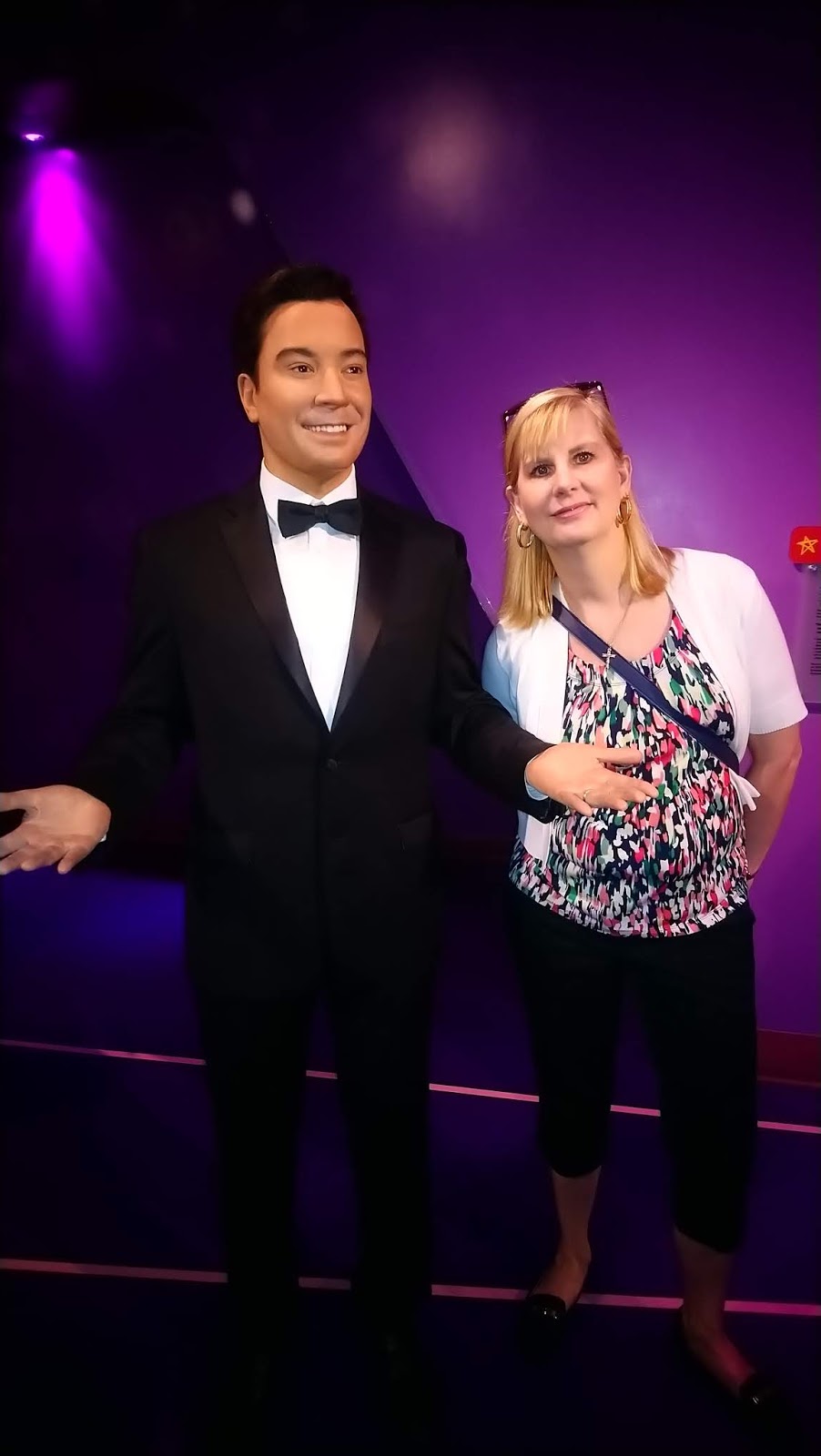
Day 17 - Dream Event/Retreat:


What could be greater than chatting up my books with Jimmy Fallon?

Day 18 - Teaser Tuesday:

I've already given you the first paragraph of my current work in progress, so what about a snippet from Sirenz 3- A New Trend? (I hope to set this up as an ebook- it's on the List of Things To Do)


            This is how I DIE?? Hit by a dirty black Scion Cube, in the red-light district?
            WHAT will my mother think?
           How much is this going to hurt?

            As time slowed, the driver’s eye glanced up, probably from his cellphone. Just before he killed me, he’d know it. There wasn’t time for shock or regret or surprise to set in.
            I closed my eyes.
            If only I still had Hades’ picture, I could call out for help. But no, I had to spite him. I resigned myself to my pathetic fate.
            Annnnnd.... nothing. Was death instantaneous, and I was already a corpse? Well, that answered one question- we kept our consciousness. Fabuloso; I can spend eternity regretting my hubris. The Fates are probably smiling at that. Just think how cheerful my death will make Persephone. The bitch.

Day 19 - Background Noise:


That's right- NOTHING. I need silence when I write because otherwise I will sing along, or think about what the song means, or recall memories. Silence is golden...

Day 20 - Reader Love:

This was made by Melissa, when Sirenz debuted. So clever!

Day 21 - My Team:

Well, this changes as people move in and out of my life. Currently, it's my agent Sue, my friend Patti Petrone-Miller, my family, my critique group, the fabulous Kidlit Authors Club, and some SCBWI colleagues I always reconnect with. (I'd like to add Steven Spielberg, so call me Steven, 'k?)

Day 22 - Greatest Strength:

I'm rarely at a loss for words, which is good because I don't get writer's block, but has its drawbacks because sometimes I should just keep quiet...

Day 23 - Biggest Distraction:

Social media. It's a necessary evil for authors because we basically have to do all our own marketing (unless you're a celeb which, sadly, I'm not.) It's too easy to get pulled in too many directions with all the content out there.

Day 24 - Non-bookish Hobby:

Gardening.
My meditation garden; it helps me solve plot twists & gives me space from people.
Day 25 - Motivation:

Soooo many things give me motivation; simply going through life creates so many story ideas. I won't live long enough to write all the books I want. Too bad.

Day 26 - Prized Non-bookish Possession:

Without going into all the family drama, I love these pearls. Not very trendy now, but they were a gift from my mother-in-law, a wonderful woman whom I cherished. Now that she's gone, just wearing them makes me feel like she's nearby, listening to me.


Day 27 - Bookstore/Library Love:

This is a hard one; I have found that unless you're an instant bestseller or someone famous, bookstores and libraries don't really support author visits. I've had a few, but even my hometown library wouldn't host me, so... yeah. Book festivals (and some libraries host festivals) which aren't exclusionary are where it's at for most authors.

Day 28 - Acknowledgments:

This, too, changes with time. People come and go, not always under ideal circumstances. I have a different acknowledgment in each book for those people who at the time deserved a shout-out. The one constant has been my family, a perpetual source of not only material for my books, but 'motivation' for me to make us 'rich'. They have their Lamborghinis all picked out.

Day 29 - Weirdest Thing to Happen to Me:

I added this because this year is a Leap Year and I didn't want Day 29 to be left out. When my oldest sons were about 4 and 5, I took them to the Game Farm in Riverhead, NY. My mom had one stroller and I had the other. We toured the place, and stopped by the monkey cage where a worker was feeding the monkey orange soda. After chatting with him, not only did I learn that they fed junk food to the monkey (who was in too small a cage, it made me sad), but that the owner gave the animal cigarettes, and regularly beat and tormented the poor thing. Disgusted, I walked away. Not more than a few minutes later, we heard screaming; the worker had forgotten to close the cage and the two monkeys escaped, going on a rampage. People panicked and ran. My mother and I ran as fast as we could, heading for the nearest exit, rather than the cafeteria the park urged us to go to over the loudspeaker. A man with a rifle ran by, followed by others with those rope nooses they use to restrain animals. A woman started screaming because the monkey was attacking her son, then her. Then the shots rang out. My mother and I made it to the exit, shaking uncontrollably. I couldn't speed away fast enough. To my knowledge, the owner was never fined, although the game farm is gone.

So, that's an author's life for you. Sorry it's not more exciting, but there's always hope!

Char

Wednesday, September 26, 2018

Books You Didn't Know Were Banned

It's banned books week. Every year authors, librarians, bookseller, educators, readers, and so many others who love books and reading will discuss and debate about the unfairness and danger of banning books. They will point to Nazi and other repressive regimes as a stern warning not to go down that deceptive path.

And that's a good thing.

But let's talk about a genre of banned books that gets no notice; Indie books. As a hybrid author (both traditionally pubbed and indie publisher), I see this happening All. The. Time. No, our indie books don't make the lists- because we're ignored. Here's how we're banned:

Bookstores, both indie and Barnes & Noble, curl their lips when you mention your book is indie pubbed. Maybe read the book before you judge? There are plenty of indie books that are way better than some traditionally pubbed books. Even when I could promise that on my book launch I could sell 50+ copies (I had relatives and friends showing up), I still wasn't welcomed to hold my launch at a bookstore.

So many organizers of book festivals say that indie authors aren't welcome. I understand you don't want to be overrun with poorly written books (everyone thinks they're an author, but I've seen some celeb books that are horrendous yet some traditional publisher published them!). Why not check the books out? Ask us to submit a copy for review. Anyone should be able to tell within a few chapters if the book is acceptable. Or ask for proof of reviews from such trusted sources as Publishers Weekly, et al. Instead, indie authors are mostly banned from a majority of the book festivals, especially the big ones, which would greatly help indie author sales and publicity. (More than one indie book has sold well and been picked up by traditional publishers. Right, Amanda Hocking?)

Reviewers follow in step too. Only in the last few years has Publishers Weekly opened a section to review indie books called Booklife. Surprise! some of them got good or great reviews! Now if VOYA, Kirkus, School Library Journal, and the other major reviewers would do this, we indie authors might have a modicum chance of success.

Even Amazon, once the beacon of hope for indie publishers has recently thrown us under the bus by proposing allowing third parties selling copies of our books to place their 'Buy' button before us as the publisher. While Amazon still makes money, authors are cheated out of royalties. Amazon is doing it to traditional publishers too, so maybe they will fight back and form their own distributor, bypassing Amazon or at least making the selling field level. Indie authors have no David to fight the Amazon Goliath.

Without recognizing that we exist and allowing us a small crumb of attention, all these participants are effectively banning indie authors. It doesn't matter the reason they give, it's banning, plain and simple.
Photo by Kat Jayne from Pexels

Char


Monday, January 15, 2018

Serendipity or Opportunity?

I fell on some ice Wednesday. I didn't think it was a big deal- until Thursday night. I could barely move on Friday morning and was forced to cancel my appearance at the Burlington Country YA Author Book Festival. I was dreading yoga on Monday morning, although I was starting to feel better.

Should I go... or stay home in my comfy jammies, with a cup of chai, and finish those revisions...?

Sigh.

I went. After class I chatted with my fellow sufferers and mentioned my fall, and that I had to cancel going to a book signing. This lead to them asking if I was an author? What did I write? Would it be suitable for her grandchildren?

I handed out bookmarks. Sometimes this can generate online sales. Then, reluctantly, unsure, one woman mentioned she was a writer too. Memoir, not published. She shyly asked questions about writing, publishing--and would I come speak to her writing/critique group at the library?

From a small chat I've (hopefully) made a sale and although I won't get a speaking fee, my appearance may garner more sales from both the audience and the library (if they don't have my books already). You just never now when an opportunity for a sale, even for one book, will arise. Maybe that one book will be recommended for a book club, where all the members buy a copy. Or a teacher wants you to talk to her class because they'll be discussing your book after she buys a copy for each student.

Keeping all these scenarios in mind, here are 5 tips:


  1. ALWAYS carry bookmarks. I've found business cards are static, boring, and too small to be effective. There are a number of companies that can print them economically and assist you (or for a small fee) do the design.
  2. Use bold colors and an attractive, easy to read font. Larger bookmarks allow you to post more information. Smaller ones are easily lost.
  3. Put your covers and (if possible) an illustration from the book prominently showcased. Graphics draw the eye quicker than blocks of text.
  4. List important information: your name, full title of your book(s), the publisher, your website/blog. I would also recommend the ISBN so librarians and teachers can quickly find your book and order it!
  5. USE THEM. Bookmarks don't bring any attention to your book sitting on your desk. Hand them out, leave them in bookstores, libraries, schools, workplaces, Starbucks, etc. The worst? They get thrown out. The best? Someone picks it up who could help your career.

See you next week!

Char


Monday, June 26, 2017

All's Well That Ends Well...

Here it is!


The final (actual) book in the Evolution Revolution series: Book 3, Simple Lessons.

It's been a whitewater rafting type of ride. So many ups- from working with a wonderful illustrator to seeing how beautiful all 3 books came out, to the downs- having to go it alone for books 2 & 3, and not being welcomed by bookstores, libraries, festivals, etc. because this series is Indie published. (Why not look at it and judge for yourself rather than dismiss it out-of-hand?) I'm both sad and glad to see the series completed.

I have one more secret about the book to reveal, but all in good time. (It should be available for ordering by the end of this week.)

Now I plan to concentrate on revising several manuscripts whose time I think has come. I'm still agent querying. My NaNoWriMo project needs to get a finished outline. I'm working on getting school visits for Jack and his story. In between, I have house projects to do and I want to spend time in my pool/yard.

If you could, post a review, give a little love, and to entice you, here's an inside pic of Jack showing off his newly learned science principles...


Don't you wonder what this squirrel is up to that he has to fight off a human?

See ya around-

Char


Monday, April 17, 2017

Who Doesn't Love A Book Festival?

Like many authors, I attend book festivals. I like meeting and talking to people about books, being an author, giving writing tips--and selling my books.

Some book festivals are wonderfully organized, I return year after year, even if I don't sell a lot of books (you never know when you're going to make that one connection that changes everything).

Some are so awful, I don't return. I hear authors complaining about certain aspects of the festivals, so here's small punchlist of things to consider if you're planning a book festival- whether you're a librarian or a bookstore owner, it's going to be huge, or just a few authors. The list isn't all-inclusive as there are many aspects, but it's some of the things I notice most when fellow authors talk about the merits of one festival over another. Not in order of significance they are:

1. Let the authors know well ahead of time if there will be beverages/snacks/food available. If you aren't supplying them, fine, but we need to know so we can plan. It's impossible to do an event that is several hours long and go without food or water. When we travel for several hours, fresh food doesn't always hold up, so be humane let us know if there are shops or delis nearby.

2. With events in libraries and bookstores, sometimes you don't want us to eat at our tables. While this is understandable, we need somewhere to eat. A small room with table, chairs, and waste baskets is all we need.

3.  We all want to make the event successful, and that means getting the word out. Social media is the quickest, least expensive method. We have fans, but more importantly, you have ties to the community that are more lucrative. You can reach out to schools, PTOs, library patrons, bookclubs, and others in a larger area, especially if you are a county library or a city event. If you can publicize, and more than just a notice on your event calendar, please do so. We promise to blurb, tweet, post, and announce the event numerous times.

4. If you have someone in-house who designs event or specialty logos, share those logos with us. We love to showcase libraries or bookstores or whomever is planning the event. It brings you good PR, increases awareness of your organization or business, and maybe increases traffic for you. Plus, on our posts, it looks very professional that the event has its own logo. It means people are invested in promoting the event, they are in earnest.

5.  When authors apply to attend the event, please respond with a yes, you're accepted, or no, we've reached capacity. It's rude not to respond, and by letting us know-in a timely fashion- we can either fill our calendar with another event, or we can prepare properly for yours. We may need to create presentations, make travel arrangements, and order books. With email, there is no reason, even if a large amount of authors apply, for you not to respond (mass email is better than nothing). By not responding, you get a not-so-good reputation...

6. Make sure you have the space! The worst event I attended had authors in between book stacks at a library, and mixed YA and MG in the picture book section. There was almost no traffic-for the entire event. That's a set up for failure.

7. Another problem- putting too many authors at one table. Ideally, 3 feet of space, or, 2 authors to a 6' table, is perfect. Any smaller, and there isn't enough room for each display books, promo materials, sign, and sit. Card tables are a nightmare....

8.  Don't wait until January to plan a March event. Start a year in advance, even if you don't have a firm date. If you've never organized an event, you don't realize all the work that goes into planning. By starting early, you give yourself time to a) pick a good date, b) pick a rain date if applicablen c) get the space reserved if needed, d) start building a list of authors you'd like to contact, e) decide on a budget (do you have to pay for the space? will you offer food/drink to authors? etc.), f) work up a logo or promotional materials and have a PR plan (where will you advertise, getting info to authors for them to publicize, asking friends and colleagues to share, etc.), g) work out a schedule (will there be author panels and/or presentations? Will you have a well-known featured author?), h) recruit volunteers; one person can't do it all, i) make sure there is adequate parking for both authors and attendees. Just one snag and you'll be glad you left extra time to work it out.

9.  Talk to organizers of successful events, like YA Fest, BooksNJ, etc. (Google for a list of other events). Some planners may be too busy to respond, so my advice is to target librarians and smaller event organizers.

10. If you're going to charge the authors a fee to attend and sell their books, tell us up front. Your initial email should include this information, or if we're 'required' to join your organization to appear. Most authors will pass up an event if there is a charge unless it's a proven money maker. We have travel expenses and then to pay for the event is generally not cost effective. It's not fair, or ethical, to spring a fee on us at the last minute; and don't be surprised if authors do back out suddenly, leaving you with fewer appearing.

11. Don't forget to collect author bios, headshots, and book covers, plus book information. Do that at least several months in advance (we will update if a new book debuts). This is good info for your PR, especially if an author has a bestseller, won an award, or has a local/interesting connection.

12. We must know if a bookstore will be handling book ordering and sales, or if we are managing our own. Some authors won't do hand sales; you need to know this, and we need to know if we have to order books and pack them. Also, if a bookstore is handling the sales, we need a contact number in case we want to check that our books are in stock. Nothing angers an author more than going to an event and the bookstore didn't have the courtesy to tell them they couldn't/didn't get the book. So we traveled, and sat there, for hours, with no books to sell. And yes, this happens more than infrequently. Additionally, what are the terms; will the bookstore only order a maximum of X books, unless we buy back the unsold ones? Will they offer us a discount on buybacks since they won't have restocking /shipping fees? What about Indie authors: bookstores generally won't handle their books, so are they free to sell while traditionally pubbed have to take whatever terms the bookstore dictates? Can we opt out of bookstore sales if we think the terms are unreasonable?

13. Talk to Authors. We make the rounds of many events and know which ones are well organized. Maybe we can offer some suggestions, or give you the contact info of someone who might be able to help. You could do a quick email survey asking what they'd like to see, what they don't. While you can't please everyone, our input will give you a clearer idea of some of the issues that need to be addressed when planning these events.

14. If authors are making presentations, what about our tables, loaded with books and our things? Will someone watch them (people have 'thought' the books, left unattended, were 'free.' See the problem?) If a volunteer can't be spared, we may need to pack up our things, leaving a sign that we'll return after our presentation/panel. This is a huge hassle. Sometimes, our fellow authors can cover our tables, but if several of us are on the same panel, the tables are left unattended.

The best book festival I ever attended was PAYA (PA loves YA). And it was organized/run by a high school girl. It had a good number of authors, food, space- and one year, even with a hurricane on its way- the place was packed and I've never sold as many books at one time. She went off to college, and sadly, no one stepped into her place. I miss that festival!

So it can be done. These are only a few of the many things you'll need to consider, but if you're serious about starting a festival, or trying to improve one (very few are greatly successful the first year, so hang in there), you can do it.

We authors are cheering you on!


(This was at PAYA, one of the most successful, and best run book festivals.)

Char

Monday, September 26, 2016

The Fight for Independents!

We Americans love our independence.


We love independent realtors.

Independent business owners.

Independent political parties.

Independent thoughts.

Independent bookstores.

Independent farmers.

Independent filmmakers.

But not independent authors.

We are treated like the weird relative at Thanksgiving. Publishing people smile nervously when approached by them- and sit with the 'regular people' at the other end of the table.

As a hybrid author (books published by both traditional publishers and Indie), I'm understanding the struggle of Indie authors so much more clearly.

The disdain.
The rolling of the eyes.
The dismissing of the validity of my work.
The "we don't want your kind here" at stores, events, and festivals.

Never mind that my book (Evolution Revolution: Simple Machines) was honed over ten years and edited by peer and professional. Ignore that I spent money hiring a professional illustrator (Cathy Thole-Daniels). Skip over the four previous books published by traditional publishers (St. Martins/Thomas Dunne, Flux, Leap).

Some Indie published books are awful- I've read them. One book was so bad, I put a Post-It on every mistake (grammar, spelling, POV, etc.) and it looked like a George R.R. Martin Game of Thrones book where people flag when a character gets killed (yes, that many). I used it in a writing what-not-to-do presentation.

But I've read some great ones (I'm going by content, not sales, so Fifty Shades of Grey doesn't meet my qualifications). Sometimes, the author then goes on to a traditional contract, but the publishers didn't see the potential at first- until the public did and the bucks started coming in.

I understand that there are sooo many books out there and the traditional publishers can't print them all. (Hence, Indie pubbing helps with that...) But traditional publishers have also chosen so many I-can't-believe-you-published-this-crap books; like If I Did It by OJ Simpson. What the hell were they thinking- oh yes, celebrities bring in money, even when the book is awful.

So it all comes down to money (except for those coffee table books people publish/buy just to look chic and sophisticated). If an Indie author is trying to sell their book, they want to make money, same as Indie bookstores. (Gotta pay for the illustrator, travel to book events, PR.) It seems to me both sides could work out an arrangement which gives them each profits and happiness.

It's a hard road, but I'm not giving up. I believe in this project too much.

And yes, there are successes, but many more that aren't. It's okay, I'm not discouraged.

And I'm not going away...

Char

Tuesday, October 22, 2013

We Need A Break


My author friends and colleagues and I need a break.

We're the struggling authors; the un-famous, ignored by press, public, and Hollywood, and we're tired. We write our novels, revise them, send them off to be picked down to bare bones by critique groups, agents, and editors. We organize and attend events to meet eager readers, share our stories, sell a few books--and then no one shows. Or they show and don't buy. Large chain bookstores shoo us away, holding out for the few superstars. Bravely, we appeal to independent bookstores only to find they are ignored by most of their neighbors in favor of a deal on the internet. We spend more money than we make on promotion, traveling, cases of paper. and toner.

Yet, we continue to write, submit, revise, promote, and show up to sign our books against the stacked odds not in our favor.

Exhausted, sometimes demoralized, we continue to dream--and do.

So be kind--post a tweet, write a letter, send an email telling us not-so-well-known authors how much you enjoyed our books and that you look forward to our next work, and that you'll tell your friends to read it.

You just might save a writing life.

Char